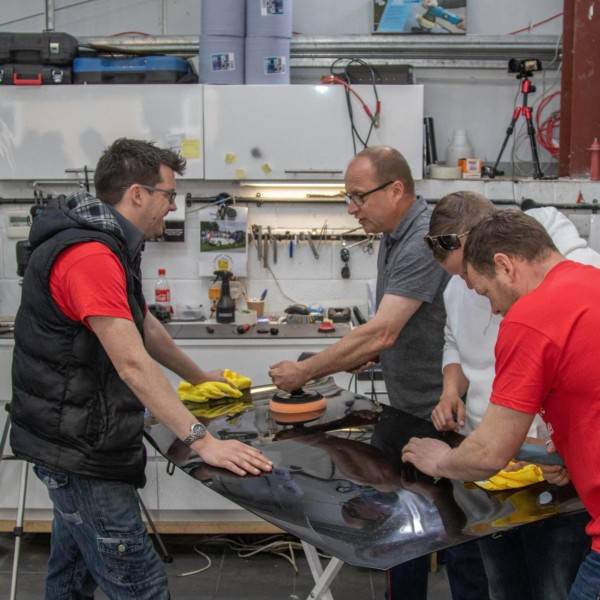

An Honest Guide From Professionals, Who Train Detailers for a Living.
Most guides you’ll find online about starting a detailing business are written by software companies that want to sell you a booking or CRM app, or by content farms that have never held a polisher, but want you to buy their products.
At UK Detailing Academy, we train detailers for a living, day in and day out, so this is written from the business side of the trade. We’ve been operating as a dedicated academy for 10 years now – in addition to our long-standing detailing businesses before – so we’ve got a pretty good insight into what happens…
So what actually separates the people who are still detailing in three years from the ones who quietly stop answering their phone?
The good news first. Detailing has one of the lowest barriers to entry of any skilled trade – you can be earning money within a fortnight, and the limit is just your own persistence.
The bad news is in the same sentence: because it’s easy to start, your real competition isn’t the lack of customers, it’s the flood of people who started the same week you did, or as soon as the sun comes out, and are racing each other to the bottom on price.
Everything below is about not being one of them, and how to remain standing and flourishing years down the line with a successful business.
The decision that shapes everything: mobile, unit, or hybrid.
Before you spend a penny, decide where you’ll work, because it changes your costs by a vast amount when starting up.
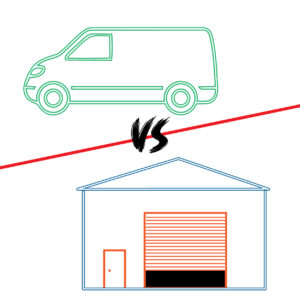
Mobile is how the overwhelming majority of UK detailers start, and for good reason. You can launch lean, you go to the customer, and you reach people who can’t or won’t drive somewhere. The trade-offs are real, though: you’re at the mercy of British weather, you’ll constantly be solving water and power access, and travel time, daylight, and location puts a hard ceiling on how many jobs you can fit in a day – and the services you can reasonably offer.
Fixed-location – a unit – costs considerably more to get going. Realistic UK unit rent runs somewhere in the region of £500–£1,400 a month before utilities and business rates – more if you go for a more “prime” location (and if the landlords will let you operate there). But it kills travel time, lets you work whatever the weather, and gives you the controlled lighting and dust-free environment that higher-value work like paint correction and ceramic coating genuinely needs.
The pattern we see most often, and generally recommend, is to start mobile, build a client base over one to three years, then move into a unit or go hybrid – a unit for premium booked work, mobile for maintenance clients. Validate demand before you commit to rent. A lease is a much harder thing to walk away from than a slow week.
We’ve got experience at both ends of the scale ourselves – Rich started mobile with a van and a boot full of equipment and the flexibility to visit customers nationwide, Ian started in a unit and has always been static-based, with a wider branch of services for customers, from tinting to specialist powder coating – as a supplement to his detailing work. It all depends what you want to offer and how best to operate your startup

What it actually costs to start
Here is where most guides lie to you, in both directions. “You can start for under £200 with two buckets, some cloths, and some chemicals” is technically true and practically useless. On the other end of the scale, “You need £20,000 to buy everything at once” scares off people who’d be fine building up a business from a more modest layout.
The honest version is that there are three tiers:
The prove-the-concept kit – a semi-decent pressure washer, a vacuum, basic chemicals, and a set of initial consumables such as microfibres, wash mitts, wheel tools – can come in under £500 if you choose carefully, or buy used equipment. This is enough to do a competent wash-and-vac and build a portfolio on friends’ and family’s cars for free, or mates’ rates cash. You may look like a beginner, because you are one, and that’s fine. The point of this tier is to find out whether you actually enjoy the work before spending real money. Plenty of people discover after their first full interior that it’s harder graft than they expected.
The look-professional-from-day-one tier sits around £1,200–£2,000. That’s a decent middle-tier kit plus insurance and a little marketing. The advantage of starting here, if you can, is that you avoid buying everything twice – cheap kit usually gets replaced within months. You can start with cheap kit, and when it breaks you’ve obviously used it enough to require expensive kit – but budget extra in advance for this option.
The full mobile setup with a kitted van, water tank, and generator is where you climb toward £5,000–£10,000 and beyond, depending on the vehicle. Big investment and pressure to get returns from day one, but you have everything, look professional, and have ‘no excuse’ to have growth held back due to lack of equipment.
Our strong advice – and this echoes nearly every experienced detailer worth listening to – is to resist buying everything on day one. Buy what you need for the jobs you’ll be starting with.
Don’t put a £500 polisher in your basket before you’ve perfected a basic wash or actually learned how to polish. Reinvest the proceeds of your first ten or twenty paid jobs into better kit rather than maxing a credit card or Klarna before you’ve earned a thing. Machine polishing can become a huge share of your revenue, but only once you’re genuinely good at it, and that takes deliberate practice, not just owning the tool. Start small, cleaning and decontaminating cars. Use the polisher only on your own vehicles until you’re confident in how things work, and what to do when they don’t.
The skills gap nobody warns you about
Huge admission here: You can, potentially, learn the mechanics of washing and interior cleaning from YouTube. 1000s have, and since gone on to have a career in valeting without issue, experimenting as they go. How good the advice will be depends on the creator, and how biased the advice is based on whether they’re being “sponsored” by a brand – ten videos will tell you ten different ways of achieving the same aims with their “system”. Learning the most efficient way of completing a task is what will help you keep your costs in control, manage your time, and correctly price your services.

What you can’t reliably learn that way is paint, or indeed anything that requires a guiding hand to make adjustments until you’re doing it correctly, and understand the reasons why.
Reading a panel, understanding what a defect is and isn’t, knowing when a swirl or scuff will polish out and when you’re about to burn through the last vestige of clear coat, choosing the right pad-and-compound combination for a given surface or defect – this is where confidence built on YouTube tends to collapse on a customer’s £50,000 car, who will then require you to remedy it.
This is the single most common reason detailers stay stuck doing three to six cheap maintenance washes a day: they never develop the higher-skill capabilities that command higher prices, because the learning curve on real paintwork is steep and the cost of getting it wrong is somebody else’s bodywork, and your (hopefully) insurance, usually at the cost of a customer going forwards – and everyone they tell.
Whether you close that gap through formal training, a mentor, or relentless practice on scrap panels or your own car, close it deliberately before you offer it out. The detailers who can confidently correct paint and apply coatings are working in a different – and far less crowded – part of the market than the ones who can only wash. Closing that gap deliberately, through structured machine-polishing and paint-correction training, is the fastest way to move into it and gain confidence, and will reap direct and instant dividends in your business development. If you’re already established and washing daily, but it’s the paint work holding you back, our Foundation Machine Polishing and Advanced Machine Polishing skill courses target exactly that gap on its own.
Pricing: the mistake that quietly kills new detailers
If there is one error that defines failed detailing businesses, it’s pricing too low or ‘competitively’.
The instinct is understandable. You’re new, you lack confidence, and undercutting everyone locally to hoover up business feels like the safe way to win work in the early days.
It isn’t. Unless your target is volume, volume, volume, low prices attract the worst customers – the ones who’ll haggle, complain, and never return – while signalling to better customers that you’re not serious about the work you do. Worse, you trap yourself: you’re now busy and broke, with no margin to reinvest and no time to learn the skills that would let you charge more. When you do finally need to raise your prices to account for real-world costs and keep your business afloat, those cheap customers will move on to the next startup and take advantage of them, leaving you with an empty diary and starting from square one chasing the customers you wanted in the first place.

Price to cover your costs and your time and leave something to reinvest. Build clear packages from basic maintenance through to speciality work, and use vehicle size as a multiplier guide, but not an absolute – a large SUV, 4×4 or people carrier genuinely takes longer and uses more product than a hot hatch, city car or coupe. But the difference between a weekly washed and cared-for Range Rover and a never-washed, universal rubbish bin Fiat 500, time-wise, is actually quite small. Your published pricing should say “from” and be subject to inspection before price confirmation to prevent trapping yourself in a losing job.
Work out your actual costs, but by all means, research what established detailers in your actual area charge (because there are regional variations), then, if the figures add up, position yourself as a credible professional rather than the cheapest name on the local Facebook group. Being slightly more expensive than the race-to-the-bottom crowd is a feature, not a bug, and genuine customers are often put off by the lowest comparable price and will instead choose two or three places higher if price is their main motivating factor – which is an interesting aspect of pricing psychology. (Pricing strategy, incidentally, is one of the business modules we cover in Level 1 – because knowing what to charge is as much a skill as knowing how to polish.)
The legal and tax side – and a 2026 change you must not miss.
Ooh, tax… snore.
The biggest killer for a new small business is working for up to two years, then having to fold because of an eye-watering HMRC bill they didn’t expect in the form of income tax, corporation tax or national insurance.
You don’t need to overthink this, but you do need to get it right.
If you’re trading as a sole trader (the simplest and most common route, and free to set up), you register for Self Assessment with HMRC. The deadline is the 5th of October following the end of the tax year in which you started trading – so if you start in May 2026, you must register by 5 October 2027. You’ll pay income tax on your profits (revenue minus allowable expenses) and Class 2 and Class 4 National Insurance. Don’t leave registration to the last minute, and don’t ignore it – late registration can lead to backdated tax bills, penalties, and interest.
A practical habit that saves a lot of pain: put aside 20-30% of every payment you receive into a separate account for tax. The bill always feels larger when you haven’t got the resources to pay, and if it’s smaller due to write-offs, you have a bonus to reinvest or grow.
Allowable expenses include fuel for business mileage, equipment, products, insurance, a share of your personal phone and internet if working from home, accountant fees, and a portion of home utilities if you use a home office. Keep every receipt from day one, even if it’s just a spreadsheet to begin with and a photo of the receipt.

Now, the change you genuinely cannot afford to miss. Making Tax Digital for Income Tax (MTD for ITSA) has begun rolling out. From 6 April 2026, sole traders with gross income over £50,000 must keep digital records and submit quarterly updates to HMRC using approved software, replacing the single annual return. The threshold drops to £30,000 from April 2027, and to £20,000 from April 2028.
Two things catch people out: first, this is based on gross income – your total turnover before expenses, not profit. Second, if you have other self-employment or income, HMRC combines it all when checking whether you cross the threshold. Even if you’re nowhere near £50,000 yet, start keeping digital records now – the direction of travel is clear, and good bookkeeping from day one will help make the eventual transition painless.
On VAT, most new detailers can ignore it entirely for a while. In theory, you are financially better off than those who charge VAT – when dealing with private customers. The minute you start charging VAT, you’re either losing 20% of your income – as write-offs will rarely equal what’s lost – or 20% more expensive than before, which brings back the potential to lose customers to slightly cheaper competition, or reduce booking frequency.
Registration becomes mandatory once your rolling 12-month turnover exceeds £90,000. That’s a lot of detailing. There’s a case for voluntary registration if you work mainly for other registered businesses (they reclaim the VAT) or have high equipment outlay, but if your customers are the general public, voluntary registration usually just makes you 20% more expensive for no benefit. One word of caution for 2026: HMRC now monitors turnover close to real time, so don’t assume the old informal grace period exists if you’re approaching the threshold.
Finally, insurance. Get cover before you touch a paying customer’s car. The first time someone claims you’ve damaged their vehicle – fairly or not – you’ll be very glad it’s there.
That’s not just public liability (PLI only covers you for accidents created by your business operations, not for vehicle damage inflicted). UK detailing-specific brokers tend to price more accurately than generic small-business insurers because they understand the work. Get two or three quotes before committing, make sure you’re specifically covered by a comprehensive trade policy, and if you;
- Are moving customer vehicles – whether on road, in a unit, or just on private driveways
- Are working on high-value vehicles – your limit will be in your policy documents and should cover the highest total recovery value
- Are responsible for vehicles overnight – if it gets stolen or damaged, you’ll face the insurer’s attempt to claim for the loss.
Ensure your policy provides sufficient cover for your requirements, and that your equipment – whether in a vehicle or unit – are accurately valued and recorded. Underinsuring can lead to a drastically reduced settlement as a penalty, as it changes the risk you were assessed on.
Getting your first customers without spending a fortune
You don’t need a marketing budget initially. You need proof and proximity.
Detail a handful of cars for friends and family as you would for a paying client, and photograph the before and after in good light – getting a few in-progress beauty shots of yourself doing the work if possible. Those images are your portfolio and your first advertising.
Set up a Google Business Profile; it’s free, takes fifteen minutes, and is how local customers find you in a search. Encourage every early customer to leave an honest review, and reply to each, either thanking them or taking on any concerns with a resolution – because in a trade where strangers are handing you their car, reviews are the currency of trust.
Vehicle magnets, door flyers, a small pop up sign, and business cards are cheap and surprisingly effective when you’re parked on a driveway in plain view of the neighbours.
The important point: your first hundred customers come from visible competence and word of mouth, not from clever ads. Do excellent work, make it easy to see, and make it easy to book and ask questions.
The honest summary
Starting a detailing business in 2026 is genuinely achievable on a modest budget, and the demand is there. The people who succeed aren’t the ones with the most expensive kit on day one – they’re the ones who validate demand before committing to rent, price like professionals based on costs instead of racing to the bottom, invest deliberately in the higher skills that command higher prices, and stay on the right side of HMRC from the start.
They’re also realists and pessimists. If you create a business plan based on 5 days a week of uninterrupted, consistent work from month two, year-round, you’ll likely be disappointed. Building a business takes time, and the first to slash prices and descend into undercutting are the ones who are desperate and clutching at straws because they expect business to just… happen.
The craft is learnable. The business discipline is where most people fall down, and it’s entirely within your control.
That’s exactly why our Level 1 Detailing Career course exists: to get people, like you, started correctly. It’s built around the three core principles this guide keeps returning to:
- Processes and underlying knowledge – to work as efficiently and professionally as possible.
- The foundational paint and machine polishing skills – skills that separate a professional from a maintenance-only washer.
- The business side – pricing, marketing, client acquisition, SDS and environmental compliance

This, and your own persistence, is what ultimately determines whether you’re still trading in three years.
It’s one-to-one – focused on you, not a room of twenty, and it’s designed to get a new venture set up properly from day one rather than learning the expensive mistakes the hard way.
Check out the courses, or give us a call to chat.