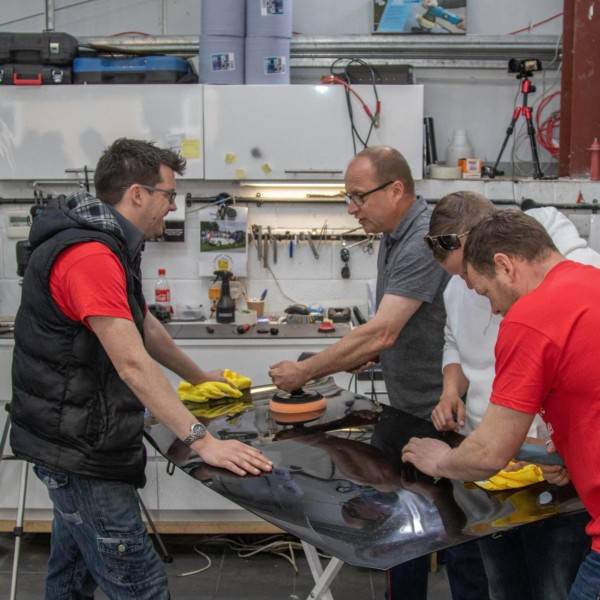

Detailing Photography: How to Showcase Your Work
Tips from photographer Bert Youell.
Automotive photography is something that inherently appeals to detailers. It is not only a great way to appreciate and showcase your work, it can become a profit centre in its own right.
A strong portfolio does real work for a detailing business, and the good news is that the difference between a flat snapshot and a striking image is mostly down to composition, not kit.
Anyone can take a potato-quality photo as they finish a job in a rush to pack the van, but the right picture, properly framed, can make a huge difference.
It is worth the effort too, because the image carries the post. Study after study of social engagement has found the same thing – posts with attractive, attention-grabbing photos comfortably outperform those without, often by a wide margin – and most customers shopping for high-end detailing will study a portfolio of completed work on your website before they decide who to call. Getting the shot right can pay real dividends, and a little extra effort reaps a lot of reward.
You do not need expensive gear for any of this. It is all about the setup, and it applies just as well to a mobile phone as it does to a DSLR or mirrorless camera. So let’s get snappy with five tips to photo perfection.
Photography is half art and half science. You can know everything about how a camera works and what every button does, but without good composition your shots will never capture the imagination. Thankfully there are a few basic rules you can learn and practise to lift your photos, without needing a degree in photography or a top-of-the-range camera. Here’s our Top 5 pointers:
Pick your time of day!
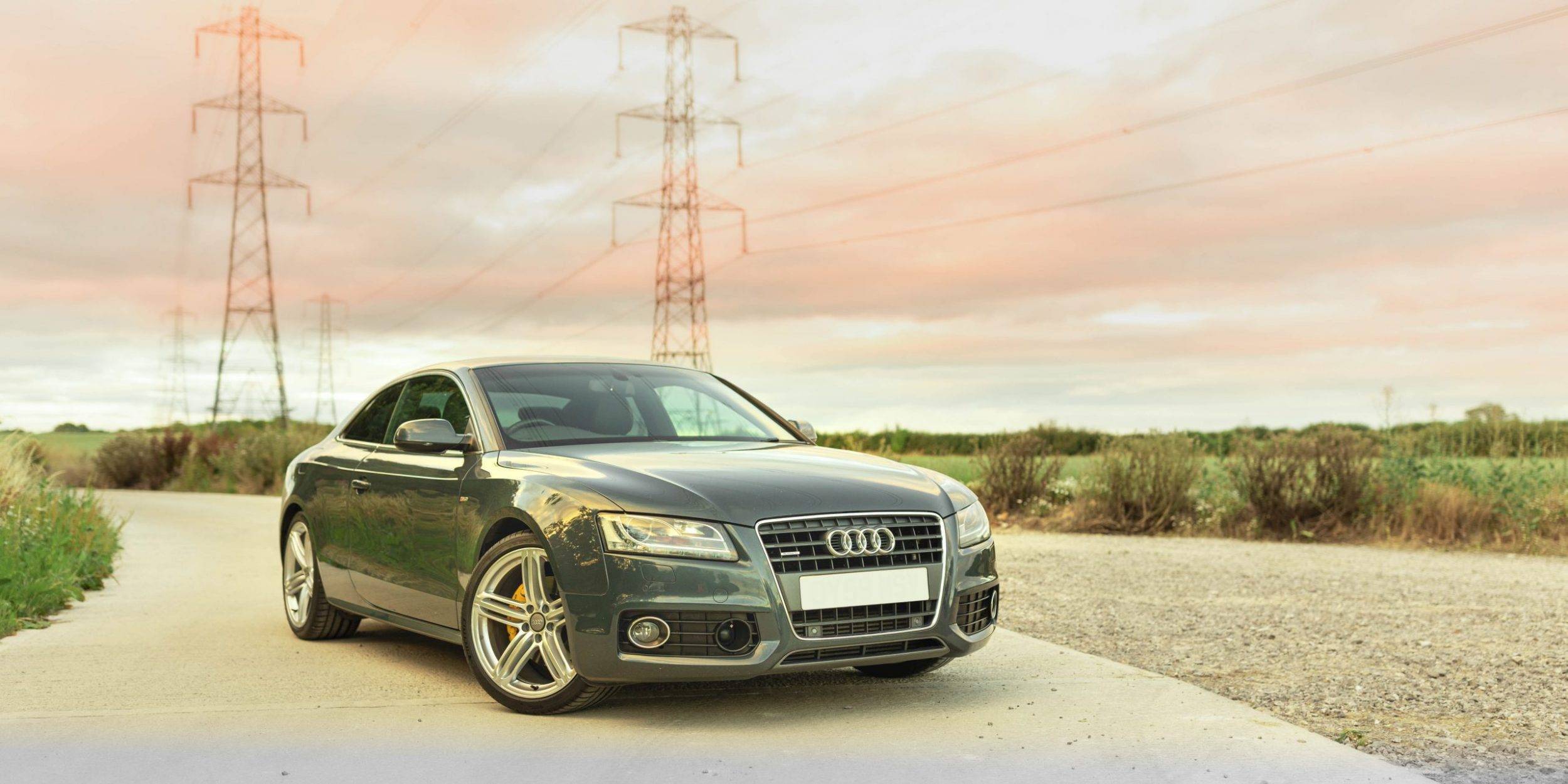
Photographers refer to the “golden hour” – shortly after sunrise and shortly before sunset. At these times the sun sits at its lowest, casting light across the land rather than straight down from above, which lets you play with shadows and contrasting areas of light and dark.
The light itself can look richer too – clean blues in the morning, deep yellows and oranges in the evening – and while those temperatures can be simulated in post-production, there is something special about capturing them in real light. Natural sepia.
Conversely, if you want a more clinical shoot without any misty-eyed romance, the middle of the day can be just as effective – the sun overhead, firing bright white light straight down – and it is a good deal cheaper than hiring a studio full of diffused light panels. You can also create really sharp contrasts: parking a car half under a bridge at noon is one to try.

Frame your pictures
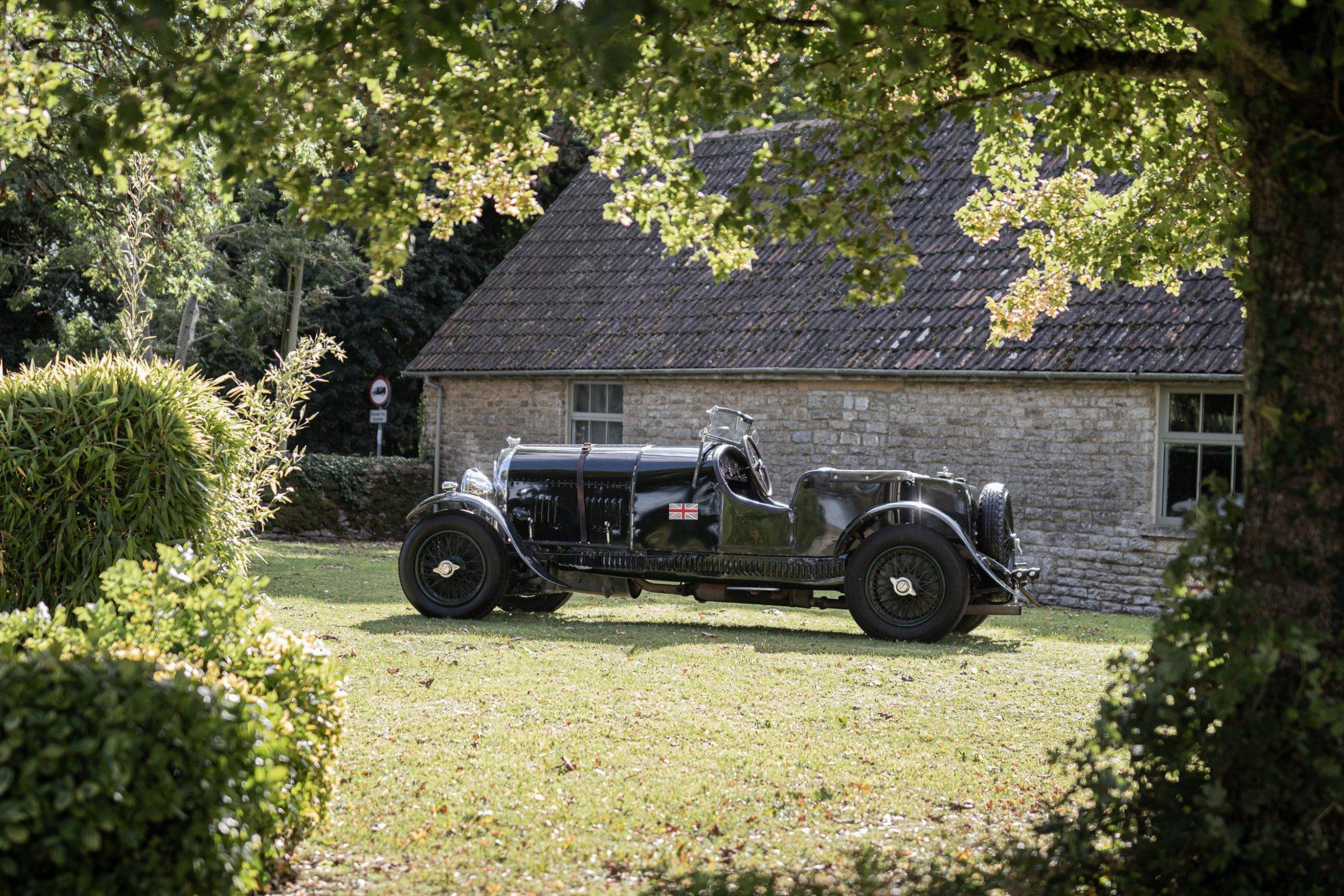
You can use both foreground and background features to enrich an image and build a theme. In the Bentley shot here, greenery in the foreground and old Cotswold stone behind give us twee Ol’ England and exactly the ambience a veteran car wants, with the photo giving the impression of the viewer sneaking a look at something special.
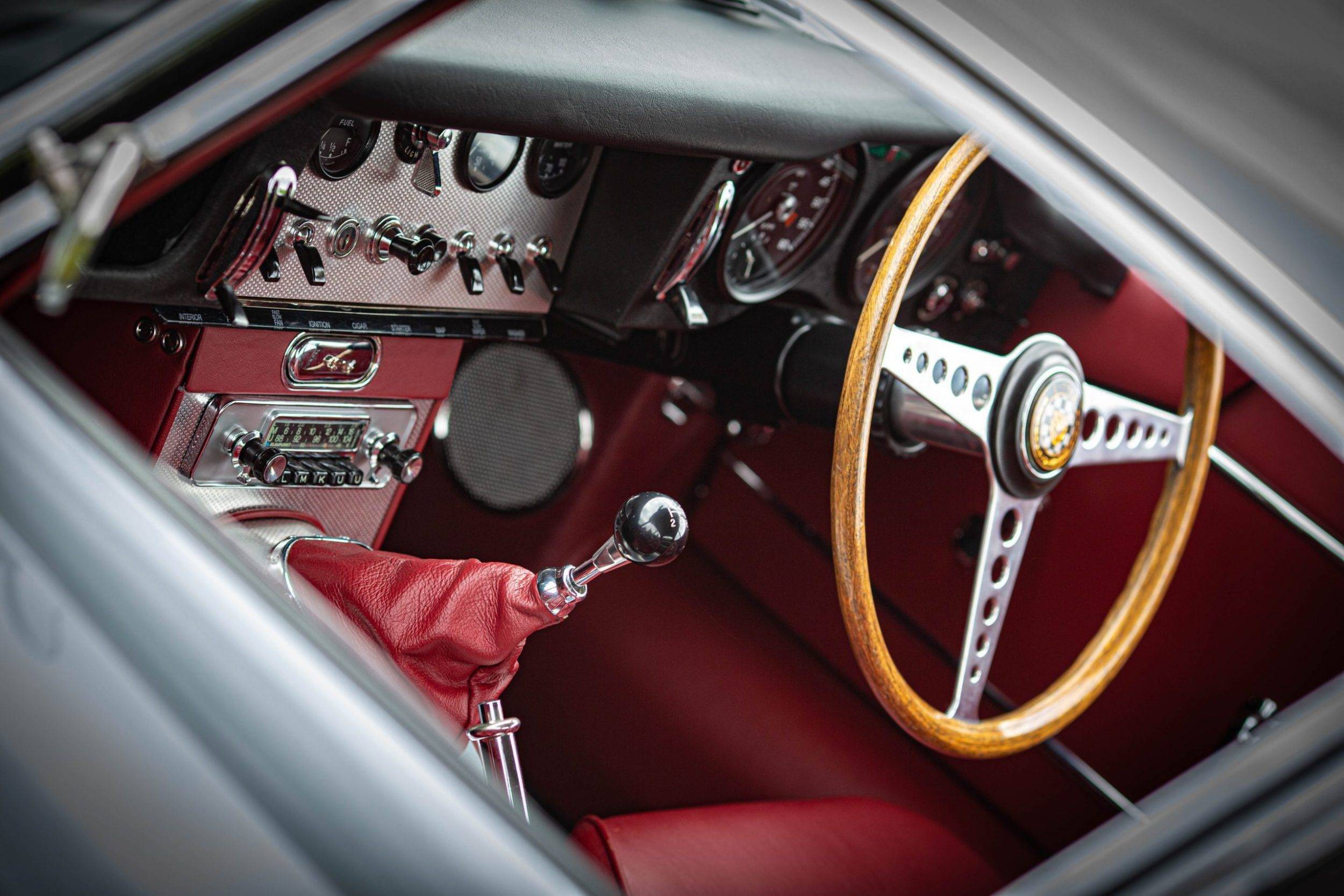
In the Jaguar E-Type shot, we wanted to suggest peeking through a window as you might at a car show, so we deliberately included some door frame in the composition. This puts the viewer into a frame of mind they will be familiar with when admiring a car, adding emotion into their impression of the image.
Mind Your Shooting Position
When it comes to positioning a photo, there are two things you can move: the object you are shooting, and the position you shoot it from. A great photo needs the subject in the right place, but simply changing where the camera is can transform the whole character of an image.
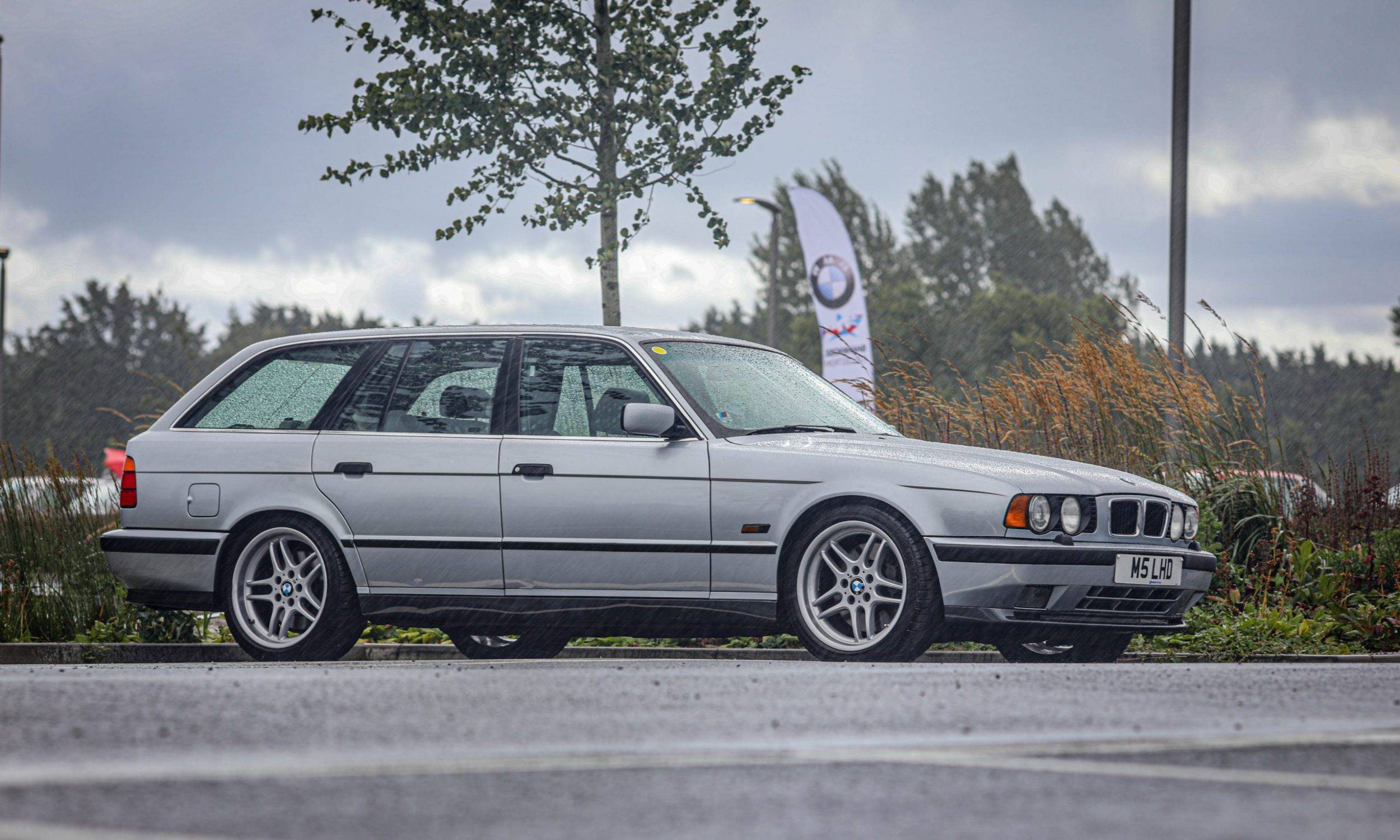
With cars we are used to seeing them at head height, exactly as we would in the street. Get down on your belly and shoot from below, or shoot down from a first-floor window, and you create a perspective that is immediately novel and appealing. In the rainstorm shot here, the camera was flat on the tarmac, which adds instant drama.
The contrasting shot involved climbing a railway embankment – not, we should say, trespassing on Network Rail land – to capture several vehicles together with the rolling Yorkshire Dales behind.


Rule of Thirds
Of all the composition “rules” you hear repeated, the rule of thirds is the most cited, and that is because it is one of the simplest yet most reliable – though it is really more of a guideline.
Picture two evenly spaced horizontal lines across an image and two evenly spaced vertical lines down it. Where they cross you get four points of intersection – the “thirds”, circled in pink below.

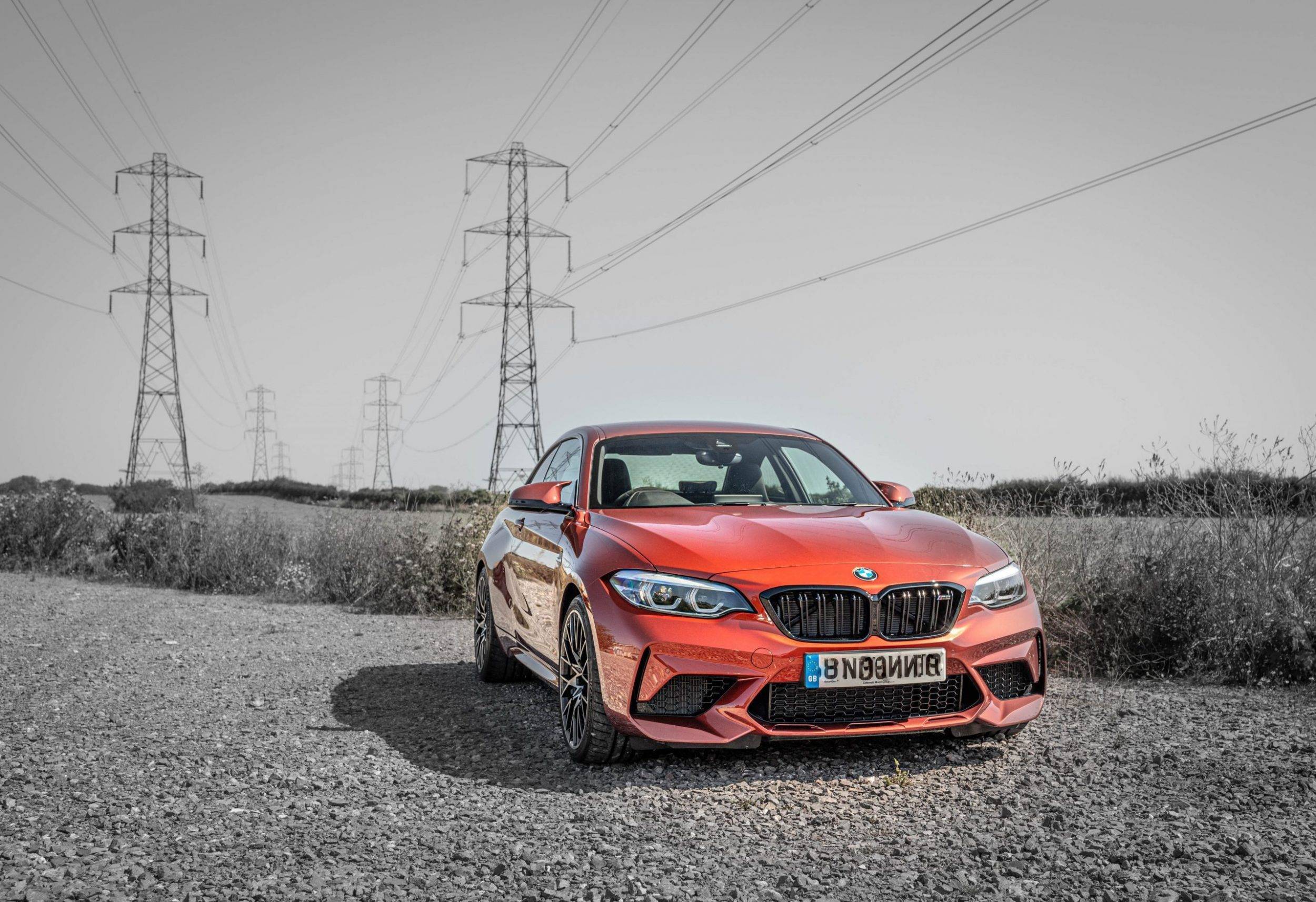
The eye is naturally drawn to those four points in images, so it pays to place the features you want to emphasise on one or more of them. In the barn example the subject sits across two points; in the car shot the grille and badge land on the lower spot as the main focal point.
There is a related trick worth knowing. As with portrait photography, cars have faces – the headlights are eyes, the grille a nose, the lower intakes a mouth. Land a headlight on one of those intersections and the image can come alive, greeting the viewer on an almost animal, subliminal level. Grrr.
Backdrop Colour / Texture
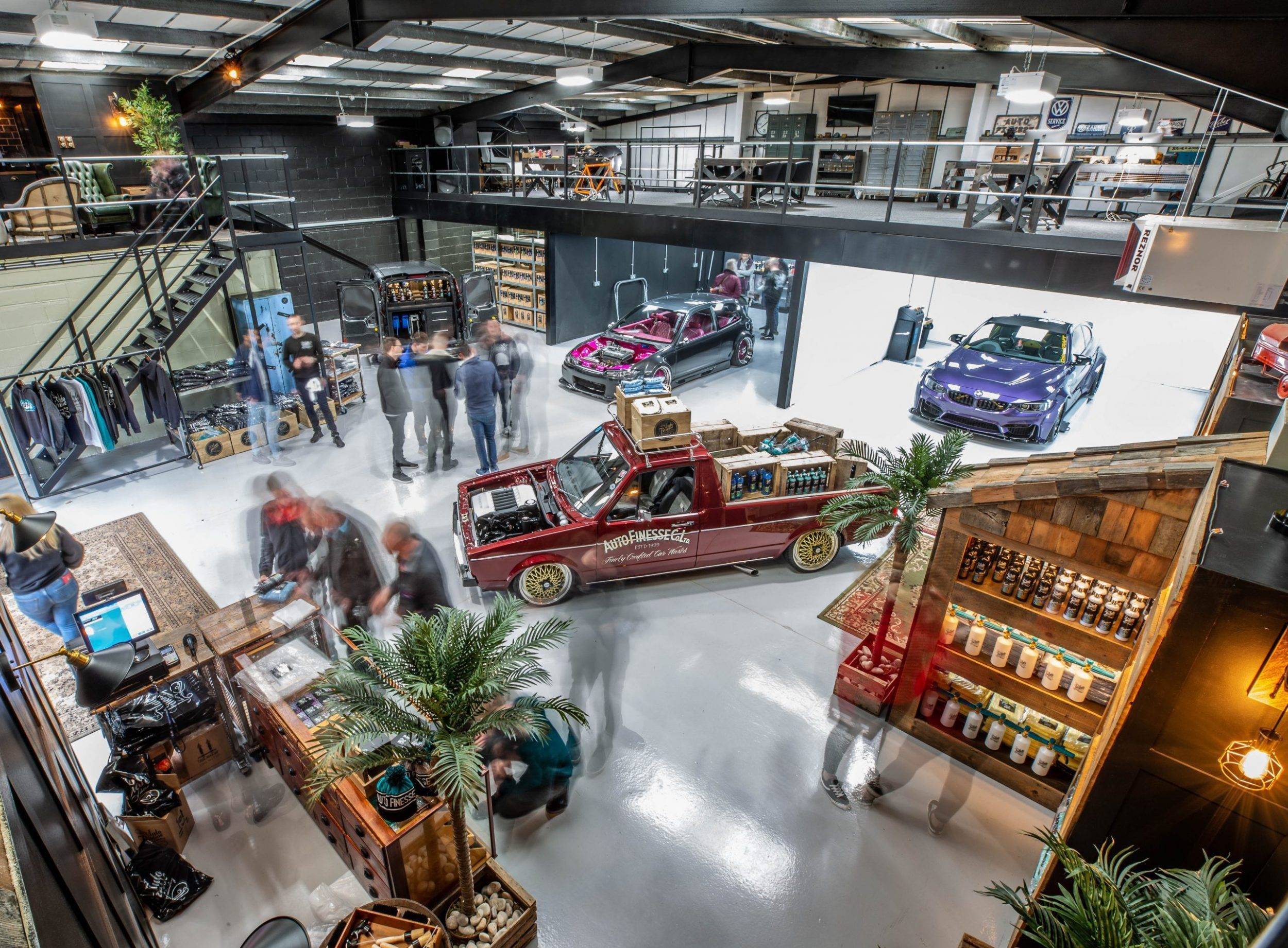
Our final tip is about matching the colours and textures around the car to the image you are after. If you are trying to show off a perfect, glass-like finish, do not shoot it against a rough, textured background. Surround it with glass, or water to compliment the reflections. Think about motion too: a stationary car with movement happening all around it naturally stands out, like the VW Caddy in this image.
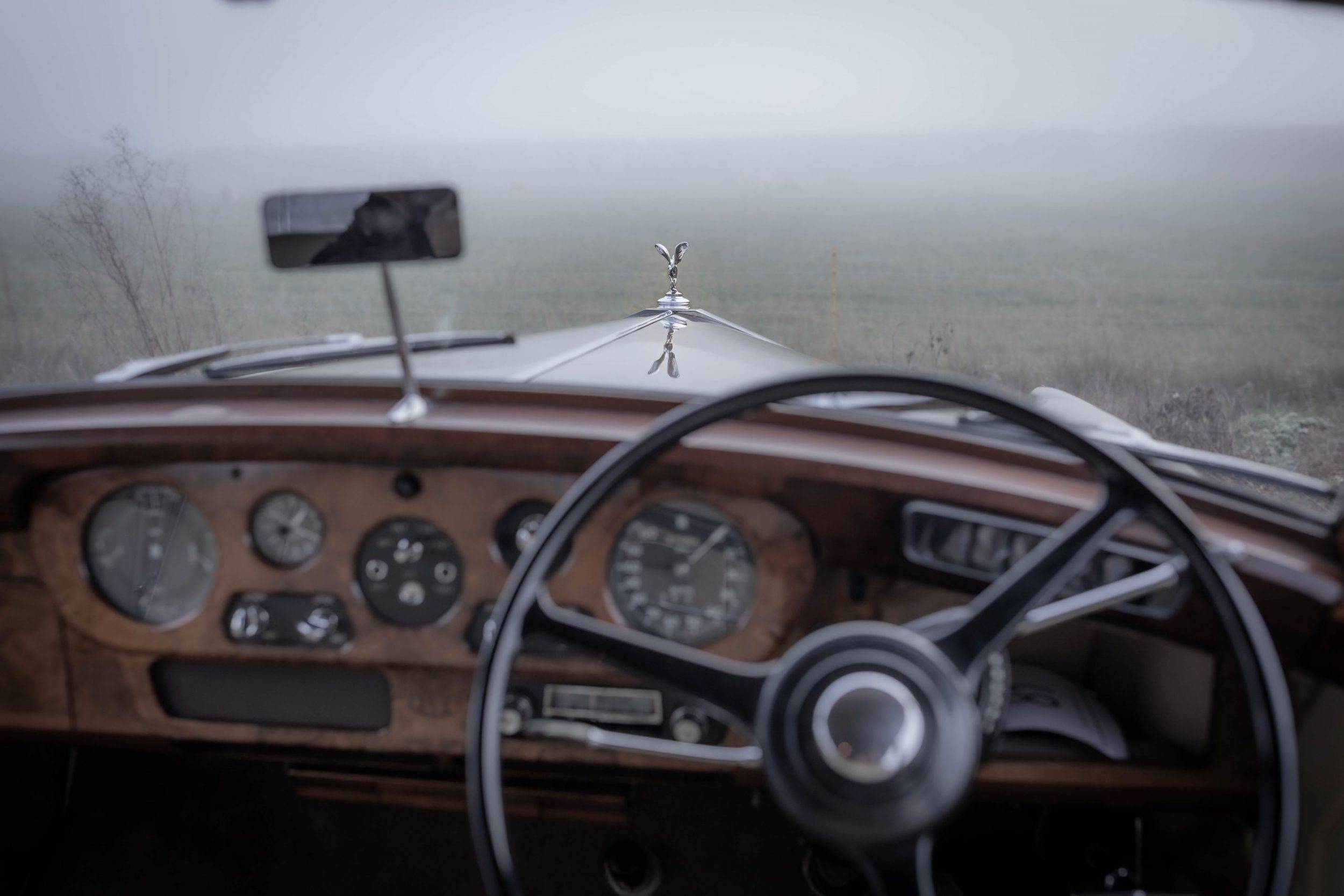
Do not think only about colour. This last shot is full of greys and browns, but with the cloud behind it the whole scene reads as almost matte and faded – apart from the one thing we wanted to highlight, the shiny chrome Spirit of Ecstasy on the bonnet. This puts the vintage Rolls Royce in it’s typical scene of a countryside estate, with the emblem the focus of the attention.
Now practise.
Whichever of these you reach for, the single biggest improvement comes from practice. Ask any professional photographer and they will tell you the same thing: shoot, review, and shoot again.
The rules above give you a foundation – the rest comes from getting out with the cars you work on and building the eye for it. You develop an eye for what looks “right”, these rules are what reflect that, and the more you can integrate them into your work the more frequently you will take the “right” photo – even if you take 100 “wrong” ones.
Finally, remember what these photos are really for: winning work. A strong portfolio is one of the most effective ways to stand out, so it’s worth pairing good photography with the wider picture of making your detailing business memorable (another useful article to read). If you’d like to sharpen the business side more broadly, our Business and Marketing course covers how to turn good work into a steady stream of customers, and use those photos to best effect in your digital marketing efforts.