Is Discounting Costing Your Detailing Business Too Much?
Customers love a discount. A cheeky offer enabling them to get a bit more for their money, and perhaps try something they wouldn’t otherwise spend the money on.
Go to any supermarket and you’ll see 3 for 2 offers, discount bins and loyalty card pricing to tempt shoppers to spend a bit more for the overall savings – they didn’t go in to buy sausages, but if buying two packs now saves them a pound, then they’ll grab them to put in the freezer.
If you’ve noticed a slow-down in business or bookings, or maybe you’re only getting the cheapest services booked, you might be considering offering a discount – maybe for new customers, maybe for those you haven’t seen for a while, or perhaps you have a cancellation to fill and you’d rather have something than nothing. However, whilst you may get some return on this in the immediate term, this type of discounting rarely solves your problem.

Why a one-off discount rarely fixes a quiet diary
A discount works well for a supermarket because the offer is rarely the whole story. The cheap sausages get you through the door, you might buy ingredients to go with the sausages, or leave with a full basket at otherwise normal prices. It also works because of volume: a few pence of lost margin across thousands of shoppers is easily absorbed.
A detailing business doesn’t work like that. You can’t sell someone a bag of shopping alongside their enhancement detail, and you have a limited number of hours in the week.
Every discounted booking takes up a slot that could have gone to a full-price customer, who might call tomorrow. So before you put an offer out, look at what that discount actually costs you.
Who a discount attracts
It’s also worth thinking about who responds to a general “10% off” offer.
Some will be customers who would have booked anyway and are happy to pay less.
Many will be people who shop on price and move on to the next deal once it comes along.
They weren’t waiting for you specifically; they were just looking for a bargain. We’d term these “Groupon” customers.
These customers are rarely the ones who rebook every few months, recommend you to friends, or pay for protection packages. You spend your time and margin winning them, and there’s a good chance you’ll never see them again.
If you’re happy with that to fill a diary though, also remember the phrase “expecting champagne for beer money”, as they will rarely be problem free.
The price they remember
Once a customer with a 10% discount has paid £180 for a £200 service, that becomes the price in their mind. When they come back and see £200, the full price feels like a mark-up rather than the normal rate. In their eyes, you charged it once, so why not again?
Some will wait for the next offer, and if you discount regularly, you teach your customers to do exactly that, because people rarely have their car detailed out of “need”, but “want”.
There’s a perception issue too. Detailing is a skilled trade, and a lot of work goes into educating customers about why a proper job costs what it does. Frequent or heavy discounting can undo that, suggesting either that your prices were inflated to begin with or that business isn’t going well.
The good and the bad discounts to offer
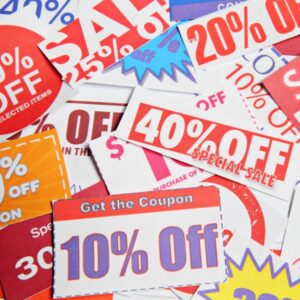
“X% off your next visit”
If you finish a valet for a new customer, you might be tempted to give them a card offering a percentage off if they book again. This usually works, but not always for the result you want – ongoing bookings.
Unless it’s time-limited, a 10% off your next visit card will usually be saved up and only used the next time the car gets really awful. As there’s no time limit on it, you might not see them for another year, which does you no favours.
It’s the same for any % discount voucher – customers will want to maximise a blanket discount, either in saving or in value to them, rather than just book in for convenience. If you’re making this offer, give it a 30-day limit so the booking pays off whilst the experience is fresh.
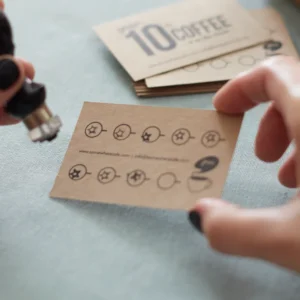
Book four washes, get the fifth free.
Similar to how coffee shops operate loyalty cards, and a similar issue to the sausage analogy, with low margin losses. It’s like a subscription without any of the useful hooks, but the closer they get, the more they want to finish the card, similar to FOMO – Fear Of Missing Out, a psychological sales technique.
If a customer is on the fence about booking a second wash, this will do nothing to help. Generally, yes – if you can get your customer to three washes, they will book a fourth because they see it as two half-price washes. However, if they’ve got to that stage of commitment, they were probably content paying full price, regardless of the offer.
Loyalty reward is not necessarily a bad customer capture technique, but has recurring exit points – and you ideally want offers that give customers consistent incentive, such as a small percent off each wash in return for certain bookingfs. These type of offers can actually cost you more than a small percentage off each wash.
Say your basic wash is £50. You do four of those and get paid £200 over a month or two, then do a fifth for free. At the very least that physically costs you around £15 in products and fuel, and you’ve not earned anything doing it. If it also takes up a slot a paying customer would have had, it costs you the full £50 you’d have earned otherwise. After all that, the customer may still get off the discount roller-coaster, having had their reward.
Instead, you can get them on the discount hook earlier with a % discount for block bookings – those same 5 bookings you’ll instead get nailed in the diary, but with an ongoing hook.
10% off, for example, means £5 discount every visit you do a £50 wash, and after 5 visits you’ve “lost” £25 – or you’re between £10 and £25 up on the 4-for-5 offer – BUT you’ve filled 5 diary slots in advance, whilst getting the customer used to the service and likely to book more. They can stay on this discount too if they keep booking blocks, and in exchange you get guaranteed work to plan around. Get twenty of these customers on a monthly visit and that’s a huge chunk of your diary pre-filled, even if no other work comes in.
Add value instead of taking money off
If you want to create an offer without discounting off the bill, consider adding something rather than cutting the price.
A free 3-month glass sealant, a wax or decontamination upgrade, or an interior fabric protector might cost you a few pounds in product and ten minutes of extra time, but the customer sees it as worth far more, as they see the markup charge as the freebie in terms of value-add.
Your headline price stays intact, your margin takes a much smaller hit, and the customer gets to try a service they may pay for next time. Think of it like a free sample of a new ketchup with their supermarket sausages.
Filling a cancellation
A last-minute cancellation is the one situation where something is genuinely better than nothing, unless you can fill it with other time-consuming, but beneficial tasks such as marketing or administration, as that slot can’t be sold again once the day has passed. Even so, it’s better handled quietly than advertised publicly.
A message to your existing customers, a post to a WhatsApp or Snapchat channel, or curating a short waiting list of regulars, offering the slot at a small saving fills the gap without advertising a lower price to everyone. Over time, customers who know they might get an occasional short-notice slot become a useful resource rather than bargain hunters.
Winning back lapsed customers
A customer you haven’t seen for a while already knows your work, so a targeted offer to them, based on their car(s), is far more valuable than a general one to the public.
Keep it personal, time-limited and ideally tied to rebooking. For example an ongoing reduced rate on a maintenance detail if they book their partner’s car at the same time, or a seasonal offer to solve a problem they might be encountering from the weather, such as a regular interior clean over winter.
The aim is to get them back into a routine, not to give them one cheap visit and let them lapse again.
Set the rules before you make the offer
Before you run any promotion, decide what you want from it.
Ask yourself who the offer is for, how much it will cost you per booking, how many bookings you’d need for it to be worthwhile, and how you’ll encourage those customers to return at full price. Then track the results. If the people who came in on the offer never book again, it hasn’t worked, however full the diary looked that month.
Discounts aren’t “wrong” or ineffective, but they should be a marketing tool you use deliberately, rather than a reaction to a quiet week, to gain something more than a temporary jump in funds. The best offer is the one that makes someone a regular customer, not one that simply makes them a cheaper one.
Ultimately, the best result you can get from offers is to load customers onto repeat maintenance plans – the subscription model. This fills your diary with bread-and-butter bookings, initiates a relationship and gives your customer the convenience of one less service to deal with on a job which would otherwise cost them valuable time.
Discount, but discount in a way that means your business ultimately benefits too.