Car & Motorbike Detailing Course combined – Level 1
Days 1–3: Level One — Cars
The first three days give you a thorough professional grounding in vehicle care. You’ll learn how to assess, clean, decontaminate, and protect vehicles to a standard that clients expect and trust — and how to handle everything from wash media selection and bonded contamination removal through to an introduction to dual-action machine polishing and minor defect correction. All on a one-to-one basis for tailored learning to your progression.
Alongside the practical work, you’ll cover the business and safety knowledge that underpins a sustainable detailing operation: pricing, marketing, insurance, customer care, SDS compliance, risk assessment, and more.
Day 4: Motorbikes
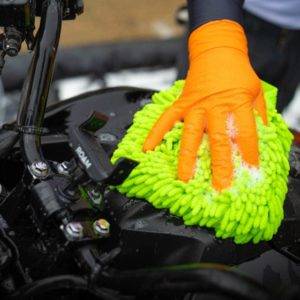
The fourth day takes everything covered in Level One and applies it directly to motorcycles. Rather than treating bikes as an afterthought, this dedicated day addresses the genuinely different challenges they present — complex geometry, exposed components, fairing removal, paddock stand setup, and small-area machine polishing — building on the skills you’ve just learned while they’re still fresh.
Assessment & Progression
Practical assessments run throughout the training, with case studies and exercises in the weeks following the course to reinforce your learning. An externally assessed online exam completes the certification process, and upon passing, you’ll receive your Level One accreditation.
From there, you can continue to Level Two, add specialist skill courses, or start trading — with ongoing support from the Academy available for as long as you need it.
Key modules covered include:
- Washing & decontamination techniques
- Selection of wash media
- Environmental considerations
- Effective drying methods
- Removal of bonded contamination
- Comprehensive wheel care
- Treatment of glass and hard surfaces
- Engine bay sanitation
- Preservation of vulnerable surfaces
- Enhancing efficiency and refining processes
- Emphasis on Personal Protective Equipment (PPE) and safety protocols
- Considerations for clothing and optimal working practices
- Conducting risk assessments
- Understanding chemical properties
- Proper setup procedures
- Interior detailing expertise, including leather and soft surface care
- Application of fillers/glazing
- Introduction to dual-action machine polishers
- Identification and rectification of minor defects
- Understanding various paint types
- Application of Last Step Products (LSPs)
- Effective marketing strategies
- Techniques for conflict resolution and exemplary customer service
- Financial management insights
- Insight into insurance policies
- Guidelines for pricing and quotation
- Essential business administration practices
- Importance of memberships and networking
- Leveraging social media for business growth
- Manual handling guidelines
- Ensuring safe working practices
- Pre-work inspection protocols
Practical assessments are integrated into the training session, followed by a manageable series of case studies and exercises to reinforce learning over the post-course period.
Subsequently, candidates undergo a brief externally assessed exam before considering the optional progression to Level Two, ensuring thorough comprehension and addressing any identified areas requiring further support. Upon completion, candidates are awarded Level One certification, providing the option to advance to subsequent levels or apply the acquired skills with ongoing assistance and support.