Ceramic Coating vs Wax: Which Is Actually Better?
Speak to many detailers, or ask the internet at large, and the response is generally:
‘Ceramic is always better than wax’.
And here begins the problem… Better AT what? Better FOR what?
The short answer: neither is universally “better” – it depends entirely on the car, the owner and how it’s used. Ceramic coatings are hard-wearing, low-maintenance and long-lasting, but they’re expensive, can be a headache to maintain and remove, and aren’t always the smart choice. Wax is easier to apply and strip, kinder to valuable original paint, and can even be the more profitable option for your business. “Ceramic is always better” is a marketing line, not a fact.
The truth about ceramic coatings
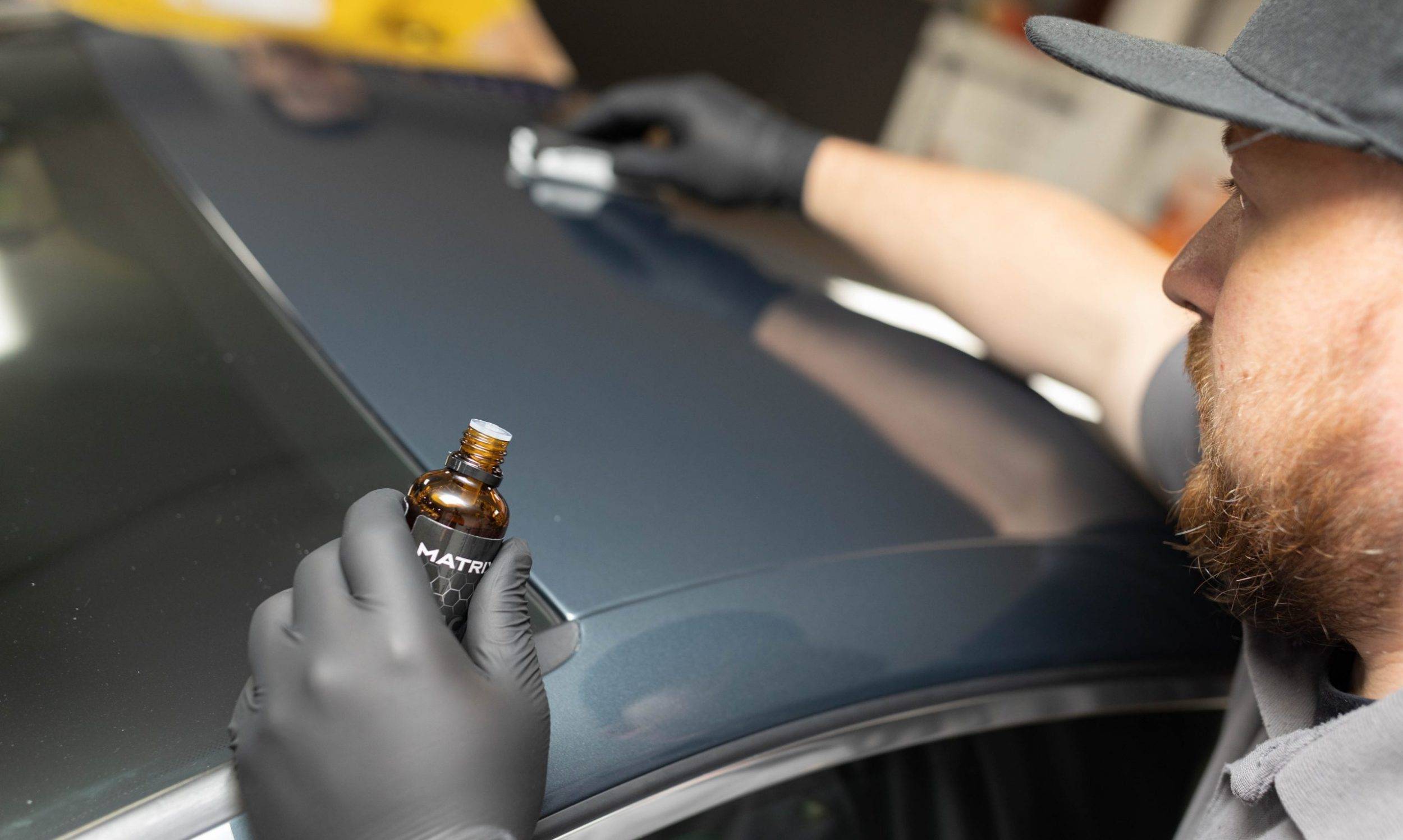
“The Truth…” sounds very click-baity, but there is genuinely a lot of misinformation out there. Ceramic coatings have many outstanding attributes as a paint protection product. They’re low maintenance, scratch resistant and long-lasting. But they also carry some inherent problems.
Likewise, waxes have some negative attributes but also do some things extremely well, such as provide sacrificial protection, enhance older paints, and the ease with which they can be both applied, and removed if necessary.
When choosing a product for our own vehicles, the decision is relatively easy as we know what we want from it! When dealing with customers however, we actually need to work quite hard before the detailing even starts in order to ensure that we are offering the best possible service we can, and maintain a relationship with returning customers.
As mentioned earlier, ceramic coatings have some amazing attributes. Below we have compiled a list of them, and given some explanation as to why they work this way.
Scratch resistance
Not to be confused with scratch-proof, ceramic coatings offer a hard resin layer, which, in certain cases, is harder than the original paint finish. This information is key as the coating will only reach a hardness level in relation to the original hardness of the paintwork. Imagine it as applying a sheet of cling film over a mattress, vs a sheet of cling film over concrete. Softer paints will marr easier than harder paints regardless of the coating, and there’s a multitude of contributing factors that determine this, from paint type to age of vehicle.
The hardness rating usually plastered all over the marketing material can be very misleading. 9H, 9H+, and 10H all sound incredibly hard and exactly what you want from something offering protection. Apart from two vital problems, 9H Mohs and 9H pencil test ratings are entirely different, and the testing carried out to fetch this data is carried out on a metal substrate – not paint – so the ratings are entirely irrelevant.
Ceramic coatings will reduce the number of scratches over a period, but will not prevent them entirely.
Hydrophobicity
Beads and water shedding! What every customer wants, and the only true way to show that a car is protected! Nope…
Believe it or not, the best coatings for ease of cleaning are actually hydrophilic. Hydrophobic is cool because you get beads, water runs off, and you can do cool Instagram-posts when it rains. There is some science behind the beading properties of ceramics, but the hardest and longest-lasting elements of ceramic coatings are often only semi-hydrophobic, as the strongest coatings often sacrifice some of their hydrophobicity, hence the emergence of two part coatings, a strong base and a weaker, but repellent, top..
Hydrophilic coatings are more expensive to make, and don’t carry the wow factor marketing companies like, so hydrophobicity gets all the press. Also note that any coating describing itself as “superhydrophobic” is lying. Superhydrophobicity is only achieved at 150-degree water contact angles, and these haven’t been replicated in coatings outside of a laboratory. Super-ish-hydrophobic is the best you’ll get at around a 135-degree water contact angle, which is still good.
Gloss
Ceramics are often touted as giving massively improved levels of gloss, especially when depicted in ‘before and after’ pictures taken at clever camera angles.
Sorry to break it to you, but ceramic coatings can actually reduce gloss on a polished surface. We’ve got the very expensive machines to prove it.
If you slap a coating onto a marred paint surface, sure, the reflection will improve. But on corrected and polished paint all it can achieve is a darkening effect. This gives us an improvement in perceived gloss, as darker objects reflect better than lighter objects (think black paint vs white paint and how much reflection each comparatively gives off), but the gloss comes from the preparation.
Easy aftercare
A big tick here. Ceramic coatings are indeed relatively low-maintenance in most circumstances, with only regular washing, and occasional intensive washing with an acidic shampoo, is required to keep them at their best. Unfortunately, there are also pitfalls in ceramic coating maintenance, such as a tendency to water spot and etch, the lack of options to remove minor light scratching, and full removal and reapplication being necessary if they fail or are installed incorrectly (more on this later).
They are often mis-sold as zero maintenance, a magic unicorn bullet which means you never need to clean your car. If you don’t maintain a ceramic coating it’s won’t suffer, but it also won’t give you the benefits of an easy to wash car. Stuff still sticks to the coating and if it builds up then more stuff sticks to that. The coating will still be fine underneath, but you wouldn’t know it was there until you give it a full decontamination.
So what about waxes then?
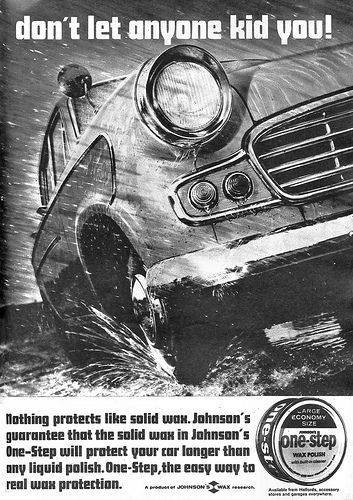
By the sounds the marketing campaigns make on the untimely death of carnauba, wax should be pretty irrelevant to modern detailers? Not quite…
Wax is often seen as the ‘enjoyable’ way to protect a car these days, a way for home users to spend their Sunday lovingly caressing their weekend toy with bubblegum scented pastes, whilst detailers opt for hi-tech coatings which require a degree and thousands of pounds of equipment to install for everything from new car protections to post-detail finishing. Neither is accurate.
The issue here is that most are oblivious to how much more complicated ceramic coatings can make things in the long run.
The problem with removing ceramic coatings
Ceramic coatings cure into a microscopic resin layer that bonds tightly to the surface of the paintwork – most manufacturers describe this as bonding at a molecular level with the clear coat. That’s excellent for lifespan, chemical resistance and scratch resistance. But it raises an awkward question: What happens when the coating gets scratched, or needs removing entirely to reapply a fresh one at the end of its life?
The only way to fully remove a cured ceramic coating is by abrasion. You may have seen people online claiming certain maintenance products will “strip” a cured coating – that’s nonsense. Once cured, it has to come off mechanically, through polishing or, more rarely, sanding.
The problem is that removing that hardened film realistically means taking a little of the clear coat with it each time. Now consider that most detailers recommend a fresh application every two to three years – and you can’t simply overcoat, because the old coating will reject and prevent the new one bonding. That means a 15-year-old car could have been machine polished, sometimes heavily, four or five times purely to keep a coating on it. In trying to protect the paintwork with ceramic coatings, we can actually be thinning it a little each time we repeat the service.
Wax, on the other hand, can be applied regularly and stripped entirely from a vehicle with careful use of non-abrasive products. This makes it much more preferable for vehicles where the original paint is way more valuable than having a protection product which lasts a couple of years. The best example of this would be classic vehicles, whose paint was designed with the idea that oils would regularly be reapplied to maintain its lustre, not just locked beneath some resin.
The home-aftercare trap
There is another aspect that often gets overlooked, and that is the weekend habits of the customer…
Most customers will return to you for maintenance, which is great. You get to earn more money, and also keep tabs on the protection package you carried out.
However, there are millions of vehicle owners out there who enjoy cleaning their own cars at the weekend. Ceramic coatings are often ideal for this, but not if the customer enjoys washing, fettling and waxing their vehicle every week. This can cause massive issues if they wax over the top of a ceramic, and will leave them asking the question – ‘Why did I bother?’.
Water spotting is a known issue with ceramic coatings, and this can really put customers off if and when it happens. It only takes a mild downpour, followed by a sunny spell, and we could be looking at a coating with severe etching. In certain cases, this can only be remedied with a full strip and reapplication. Not ideal after forking out £££’s for ‘protection’.
In the short term, mineral deposits are also an issue through water spotting, but these can be remedied with water spot removers (yet another product the customer will need at home). This is the reason a ceramic coating usually comes with a short-term “topper spray” when installed, to protect it while fresh. The only coatings we have ever found which don’t suffer from this are graphene coatings, and it is literally the only benefit we’ve found in the technology – but we’re not opening that worm can now.
The final worry of home-aftercare is blocked coatings. Blocked coatings give the impression of a failed coating, when in reality, it is a blocking of the hydrophobic properties through mineral build-up. This is remedied with specific acid-wash shampoo products designed for this purpose as part of a semi-regular maintenance. Suddenly, the ‘easy aftercare’ of ceramic coatings does not look so rosy.
The revenue illusion
The last point to ponder is that magic R word that we all love in business… Revenue.
Ceramic coatings tend to be charged out at a much higher rate due to their lifespan, typically anywhere between £700 and £1500 for a paint correction and coating application. This has gently nudged a lot of the industry to ‘one-visit’ customers every few years.
They have an extensive detail, the detailer charges a large amount and waves goodbye to the customer.
Before ceramic coatings became so popular, we would see customers returning every month, quarterly or bi-annually for more protection to be added to the vehicle and a general tidy up. The illusion was that the extra revenue from one single ceramic coating job outweighed the 3 or 4 jobs per year with other products. Sadly it is just that… an illusion.
Consider the labour involved in preparing and applying ceramic coatings. They often take longer to apply and can suffer from more issues during application than most other protection products. This is before we even mention the use of air conditioning and curing lamps to efficiently turn certain ceramic coatings around.
If we look at a standard decontamination, single-stage light preparation polish, and application of a polymer/hybrid wax generating between £350 and £650 two or 3 times a year, then this would be more financially beneficial than just one £800-1500 service every 2-3 years.
There is some scope for customers to be signed up with ceramic coatings for a ‘top-up’ annual detail, but this almost defeats the object of selling that type of protection to the customer in the first place. The extra cost of the detail was intended to represent the vastly improved lifespan. There have been wild claims from certain manufacturers that their coating will last 7, 8 or even 9 years. The reality is that there is a strict annual service plan to be adhered to, and the particulars of the protection warranty are flimsy to say the least – namely issues which will never come to pass or be provable, such as yellowing or crazing.
Lifespan will depend on usage rather than years, so they are certainly worth it for a car doing 20k miles a year on the motorway, which isn’t getting taken care of particularly well. But for a 3k-mile-a-year garage queen who gets washed after a mildly dusty road trip – probably not…
Choosing the right protection
The topic of ‘Wax vs Ceramic’ is far, far more complex than most care to imagine – especially from a business perspective. Could it be that an entire industry has been drawn to the shiny new products due to trends and buzzword marketing, and actually left behind the more profitable (and less laborious) protection products? Or is ceramic coating the way of the future, like sliced bread, cars instead of horses, or
Both wax and ceramic have their place – the biggest mistake is presenting a one-size-fits-all option and pretending it’s the only one. Reading the car, the customer and the numbers, and matching the protection to all three, is exactly what we teach. To apply coatings and waxes properly – and advise customers honestly – our Skill Courses cover protection in depth, and our Career Development courses put it in the wider business context. For more on the chemistry, our guide to UHS clear coats is a good companion read.
Frequently asked questions
Is a ceramic coating really better than wax?
Not always. Ceramic lasts longer and is more durable, but wax is cheaper, easier to apply and remove, and better suited to valuable original paint (like a classic) you don’t want to keep polishing. The right choice depends on the car, the owner and how it’s used and cared for.
What does “9H” hardness actually mean on a ceramic coating?
Less than the marketing implies. That “9H” comes from the pencil hardness test, not the Mohs scale, and it’s measured on a hard test substrate rather than paint – so it doesn’t translate to real-world scratch-proofing. Coatings reduce scratching (by reducing friction, not through hardness); they don’t prevent it.
Can you remove a ceramic coating without polishing?
No. Once cured, the only reliable way to remove a ceramic coating is by abrasion – polishing or, rarely, sanding. Products claiming to “strip” a cured coating don’t work. there are chemical options for removal in the first few hours or days, but once that window passes, it’s mechanical only.
Do ceramic coatings add gloss?
No to any degree, and in some cases they can actually reduce gloss. The gloss comes from the paint preparation, not the coating. On corrected paint a coating mainly adds a darkening effect that reads as “perceived gloss” – and on marred paint it can even reduce true gloss following correction.
Why does my ceramic-coated car still water spot?
Water spotting and etching are known issues – a downpour followed by sun can leave deposits or etch marks. It’s managed with a dedicated water-spot remover or an acidic maintenance shampoo, and it’s why coatings often ship with a “topper” spray – a sacrificial coating whilst the real coating is still curing. The hydrophobicity makes water on coatings bead, forming small puddles of isolated trapped water, which evaporates, leaving the minerals behind in a spot. It happens on waxed cars too, but the marks are shed as the wax degrades in the short term, whereas ceramic coatings don’t shed.