What should I call my Detailing Company?
It’s a big decision. One that can frame your business image, grab client attention and enable potential customers to pick you out of the crowd. So how do you go about picking a name that sticks?
So what should you take into account when choosing a name, and what tips can we give you?
Make it unique (as possible.)
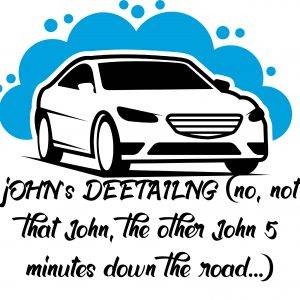
The obvious choice is to use your own name and a descriptive such as “Valeting & Detailing”. It’s simple, it’s descriptive, it’s… not without its drawbacks.
There’s the availability issue, both for website domains and Facebook pages, and if it’s restricted because its trademarked or in use by a limited company. Your name, along with any part of your branding and business, has to be memorable (we wrote another blog on that) recognisable, and pronounceable (it shouldn’t take a ten second introduction to answer the phone…
Unless your name is unusual, you are almost guaranteed to have the same company name as at least 20 other people in the country. In the UK, Xavier’s detailing could be acceptably unique, John’s Detailing, not so much – there are quite a lot of Johns…
Aside from being part of the crowd, you’ll have issues getting an easy-to-locate website address – people are generally going to forget to visit:
“www.johns-detailing&valeting_company6.uk.org”
Unless you have some cracking SEO, you’ll be overlooked by search engines for a more likely source, like the person who bought johnsdetailing.com in 1999.
Make it clear what you do
Be descriptive and on-point. “Visual Reflections” doesn’t say what your business does. As cool and hipster as it sounds, you’ll be explaining what you do to every other caller, half of which will want to know how much a bathroom mirror replacement will be.

Also, don’t be too specialist unless you only want to attract people in the know – “Renn Cleaning” will work for people who know about Porsche – Renn is racing in German, and is associated with the brand’s motorsport heritage – but that’s only a generous 1% of the country who would identify that. The other 99% will assume you’re name is Renn, and you clean anything, which can also lead to odd phone calls.
If you’re a detailer, have some reference to detailing, car care, automotive enhancement, etc in the title, so people know who or why they’re calling you, even if it’s just a tag line.
Consider branding opportunities and discoverability.
Unique can work well in the medium to long term. “DT:LR”, for example, has good brand potential and it’s a phonetic of what you do, so won’t be confusing when people pronounce it. Something like this can also mean cheap website addresses (though four letter domains are rare to find available) as it’s not a word likely to be bought and camped on by website domain registers. A lot of Chinese manufacturers on Amazon use a random set of vowels for their brand name as they will be unique, are easy to trademark and can rank highly in search results because of little direct competition, or similar sounding names.
On the other hand, an unusual, made-up word such as “En-shiner-ation”, for example, is going to be less appealing, easy to misspell in searches, and still quite vague, so won’t do you any favours until you’re more established with a regular client base. Even now, Xero – one of the worlds largest accounting programs – still has to say “Xero, spelt with an X” at the end of its radio adverts. What probably started out as a quirky name to help get them noticed has caused problems now they are established.
Finally – try not to copy or over-emulate what’s already out there.
This is a sure-fire way to get lost in a sea of similar-trend companies. It also translates as generic, unimaginative, or lazy – which isn’t the impression you want your company to give. Keep it short, descriptive and unique (to your area at least).
General wins
Do:
Alliterate if possible. Alliterative names (those that both start with the same letter, i.e. Peter Parker, Roger Rabbit, Cash Converters) use phonetics to make them more memorable, the names flow into each other and sound… right.
Area-specific. Most customers, when you’re starting out, will have a catchment area for the kind of service they are willing to travel for. Aligning a name with your geographic area will make you easier to find – if you lived in Gloucester, you would search for “Gloucester Detailing” – if that’s the name of your company; guess who Google is going to list first…. The downside is that it’s a common naming policy, and if your area (county/area/town) is already taken, don’t try to add hyphens or additions like “Company” to the name, it rarely works. Equally, if you decide to move to a different area, it’s harder to take with you… “Gloucester Detailing, Norfolk’s premier car care company.”
Use a thesaurus if you’re struggling for inspiration and unique pairings, but always check the suggestions for alternative meanings. There are various company name generators online, and Ai will give you some options, but they’re best used for inspiration rather than the end product.
Curious facts which can affect memorability.
- Names with letters that have high point values in Scrabble — J, K, Q, V, W, X, Y and Z — can be more memorable – they are less common in western languages. This rarer attribute makes a name more distinct for memory recall.
- People are most likely to remember how something makes them feel. This means that beautiful-sounding names have a better chance of encoding into long-term memory. “Cellar Door” has been rated as the most phonetically beautiful pairing of words.
- The more physical and tangible a word is, the easier it will be to remember. The reason? It gives someone an image in their mind and helps to store it as a memory. Take “mossy rock” vs. “soft place” as an example. One is an object and the other is a concept. Guess which one someone would remember tomorrow?
- Pick something you like the sound of, and can pronounce easily on the phone – the more syllables, the less appealing it can become.
- If the first word in the company name begins with a letter in the first part of the alphabet, any listings that are sorted alphabetically will put you towards the top of the list. This used to be more relevant in the days of phone directories, but it still holds water now for online listings.
Hopefully this helps – there’s no rock solid right answer when it comes to naming your detailing business, what works for one may not work for another. To take the example of Renn-Clean from earlier, you might benefit from the specialist association enough to counter the lower recognition, but it’s more of a risk without the rest of the branding and marketing puzzle doing some leg work. You can be Johns Valeting, but just accept that you’re going to have to work harder to be the Johns Valeting that everyone knows about.
Pick something you’re happy with, something that fits with your brand and target market, and something you’re going to be happy repeating for years, and for everything else, UK Detailing Academy can help with the business advice side.